Tokki Soju takes its name from the Year of the Rabbit, 2011 — the year the founders learned to make soju in Korea, from rice and nuruk. That method still defines every bottle, from the original White Label to the aged and finished expressions that followed. Tradition is the starting point, not the finish line: the same base spirit is aged, finished, and poured in markets that had never heard of soju. We are not preserving a category. We are arguing that it was always capable of more.

PRODUCTS: Unaged Soju
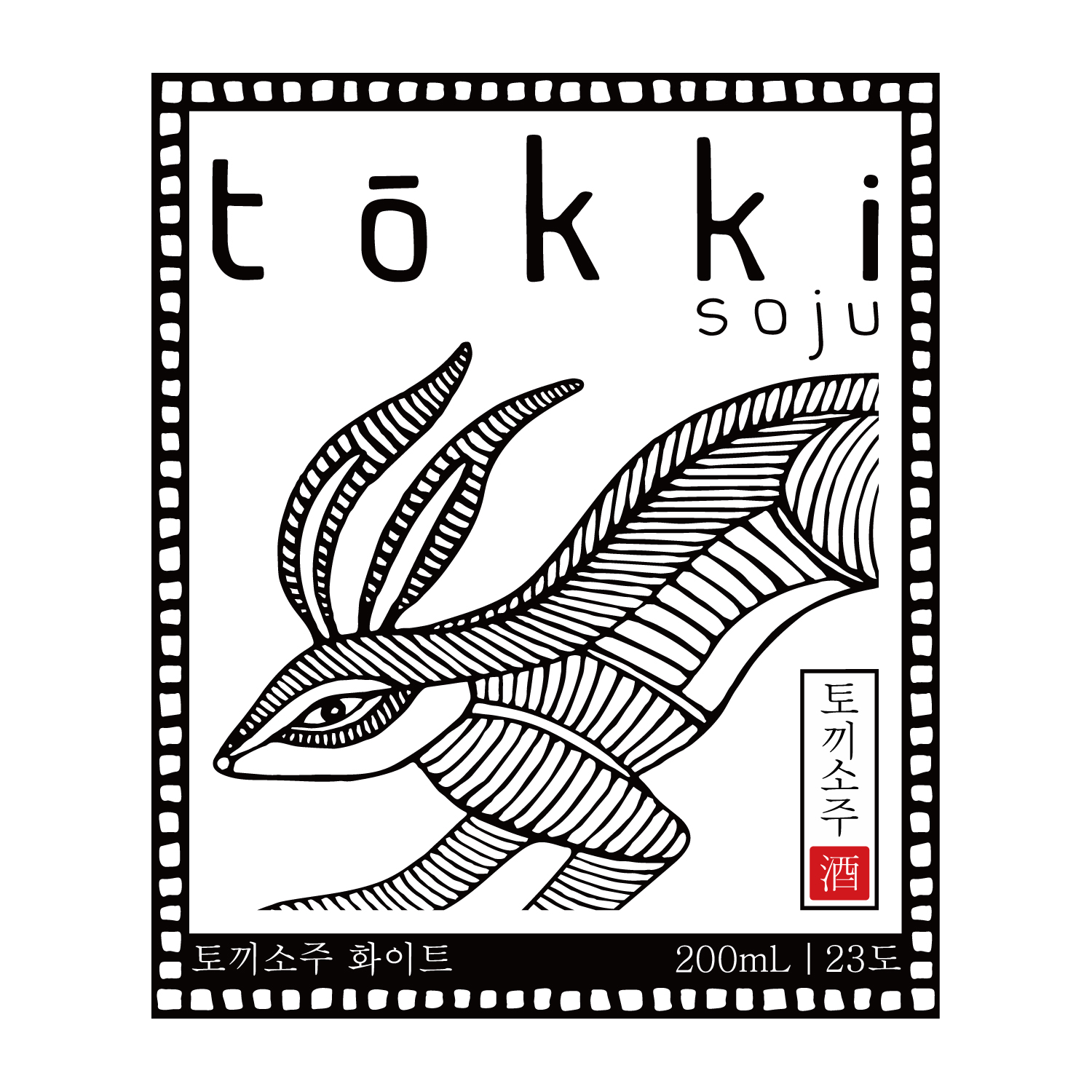
Tokki Soju White Label
200mL; 23% ABV
Tokki Soju White Label started the company in 2016. At the time, mass-produced neutral-spirit soju owned the category, and Korea had barely a handful of premium producers at any meaningful volume. We formulated with glutinous rice and nuruk, a traditional fermentation starter difficult enough that even those producers had set it aside. We didn't.
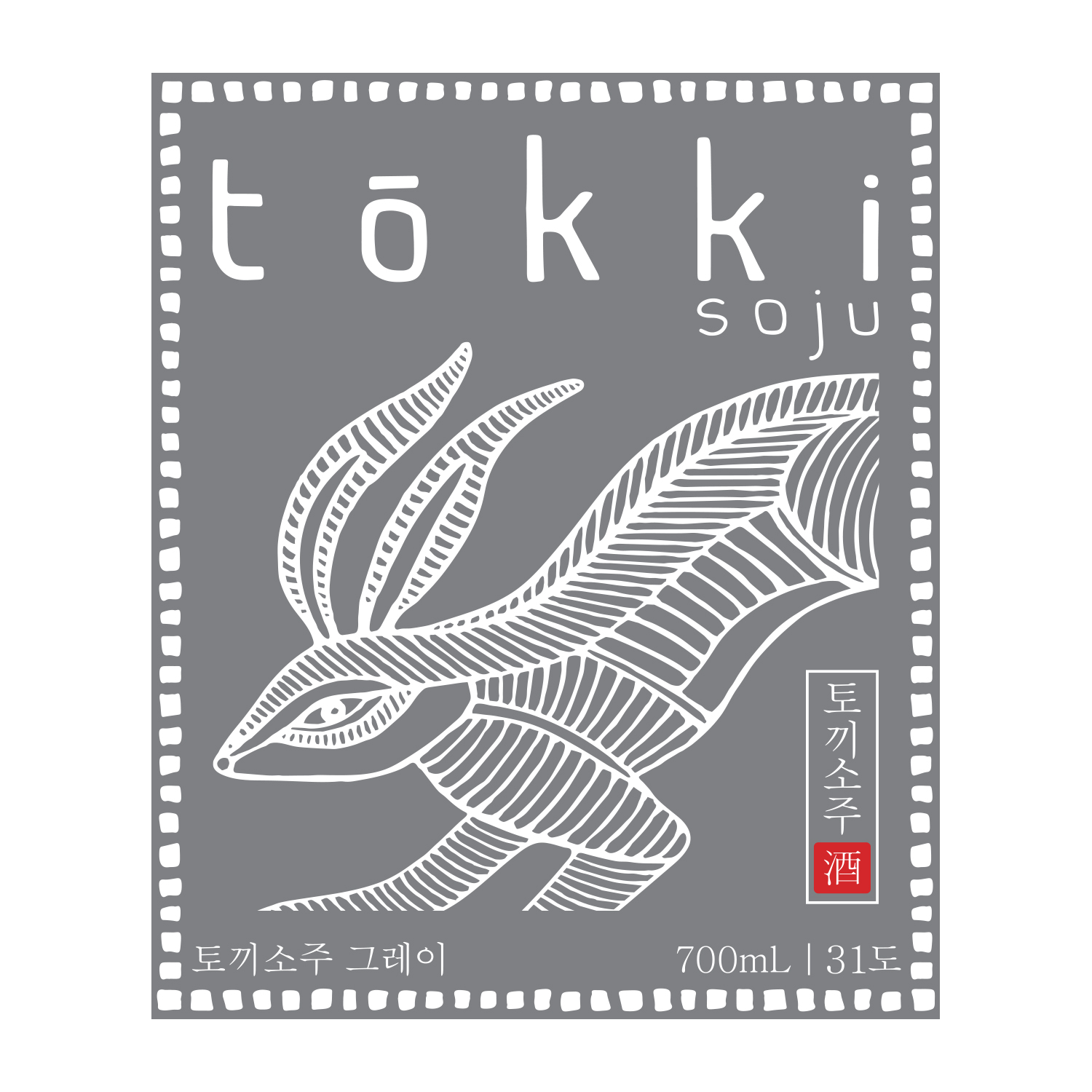
Tokki Soju Gray Label
200mL or 700mL; 31% ABV
Tokki Soju Gray Label is our most recent release, with a singular purpose: to celebrate without the full-strength ABV. At 31%, it's soft enough not to overwhelm delicate dishes, yet spirited enough to carry a cocktail — the middle path between the table and the bar.
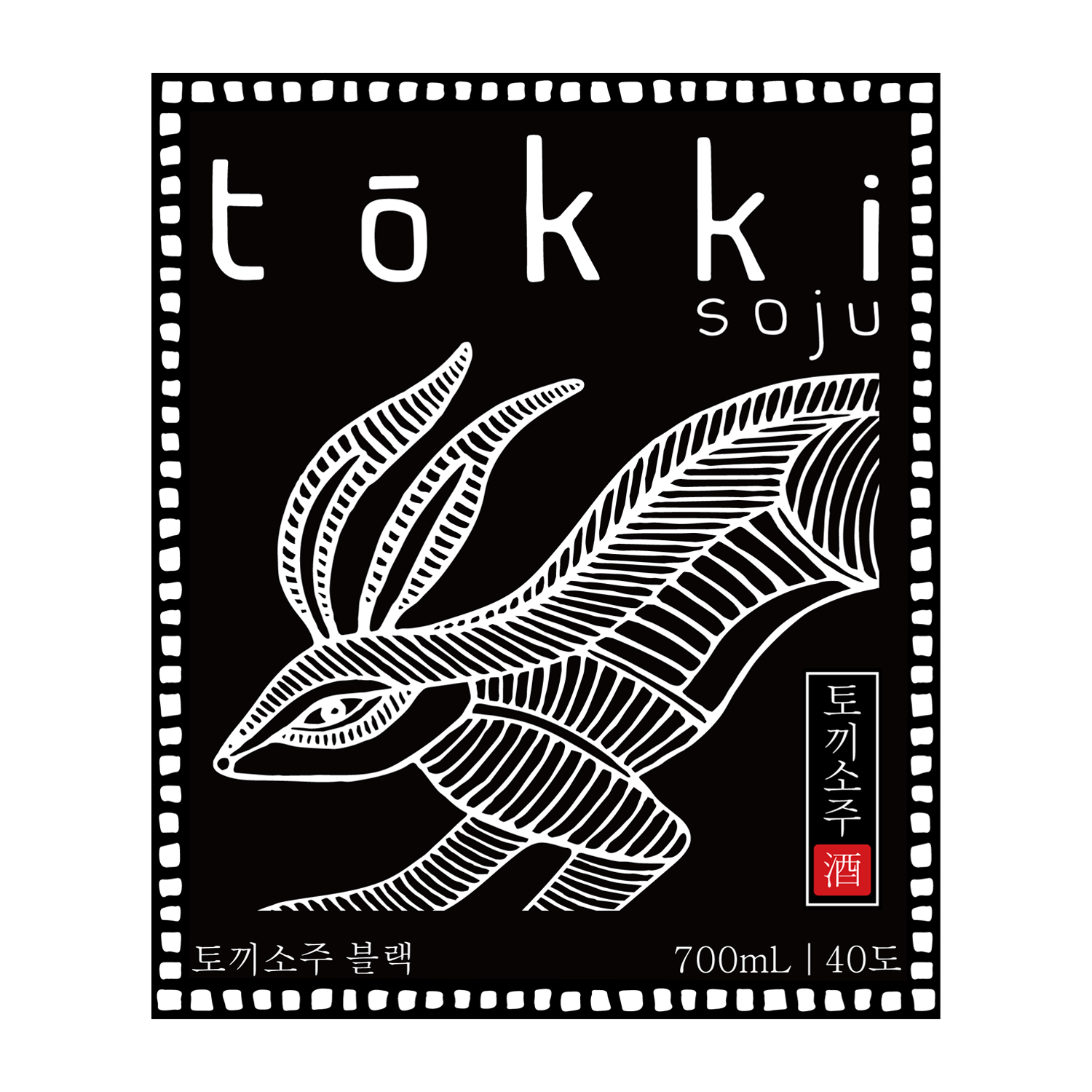
Tokki Soju Black Label
200mL or 700mL; 40% ABV
Tokki Soju Black Label, our second release, arrived in 2017. Koreans drink soju with a meal; we wanted one that could stand up in a cocktail. We remain independently owned, with no outside investors, and the early constraints showed: rather than pay for a new printing plate, we inverted the colors of the White Label. The bottle is a record of doing more with less.
Try It In: Mai Tai (substitute rum)
PRODUCTS: Aged Soju
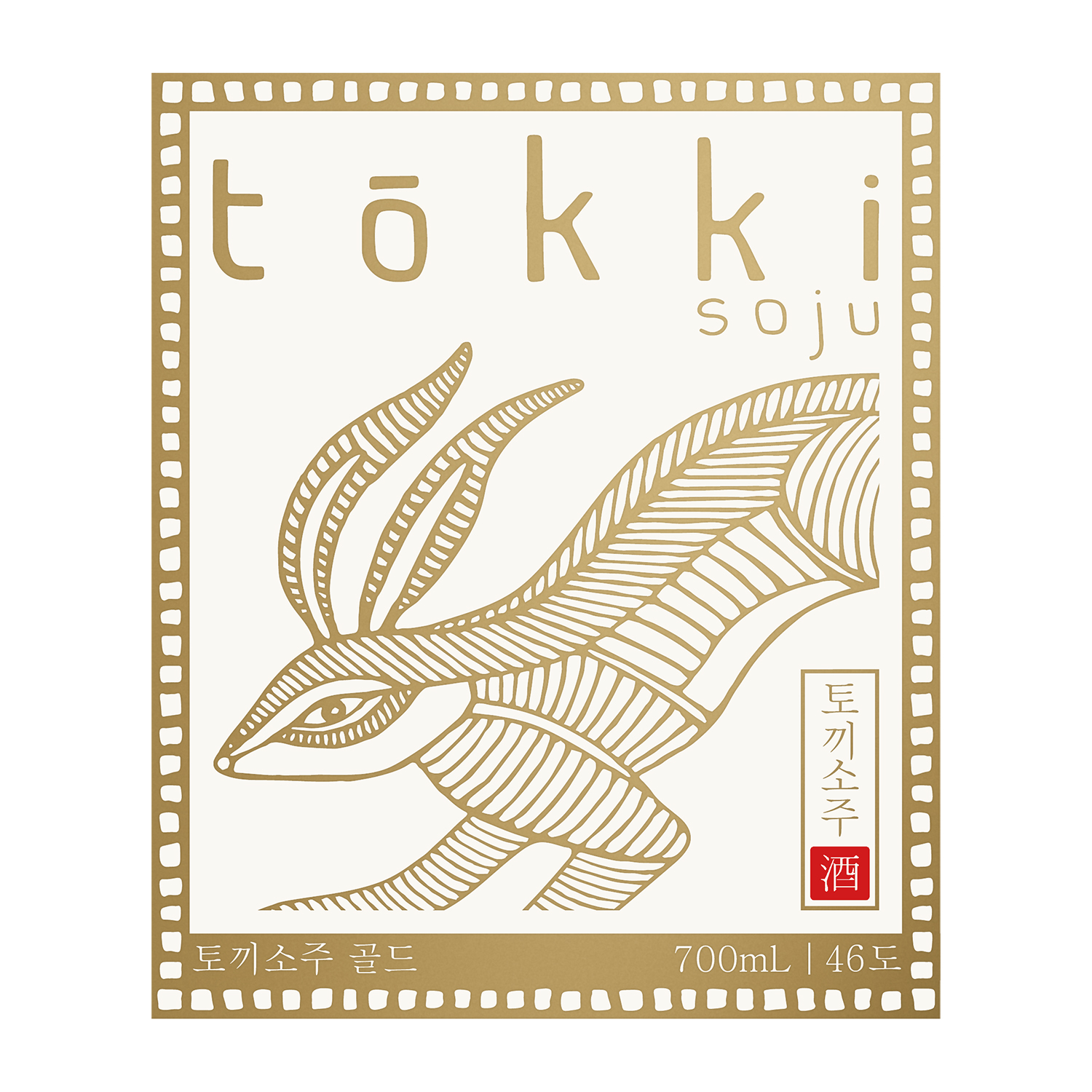
Tokki Soju Gold Label
200mL or 700mL; 46% ABV
Tokki Soju Gold Label is aged on American and French oak, in a process built rather than inherited. American oak for sweetness and body, French for tannin and structure; underneath, the same rice and nuruk that built the brand. It is not meant to be mistaken for whisky, or for anything else that comes out of wood — but it carries the depth of one. Nothing was added that wasn't already there. Only time.
Try It In: Highball
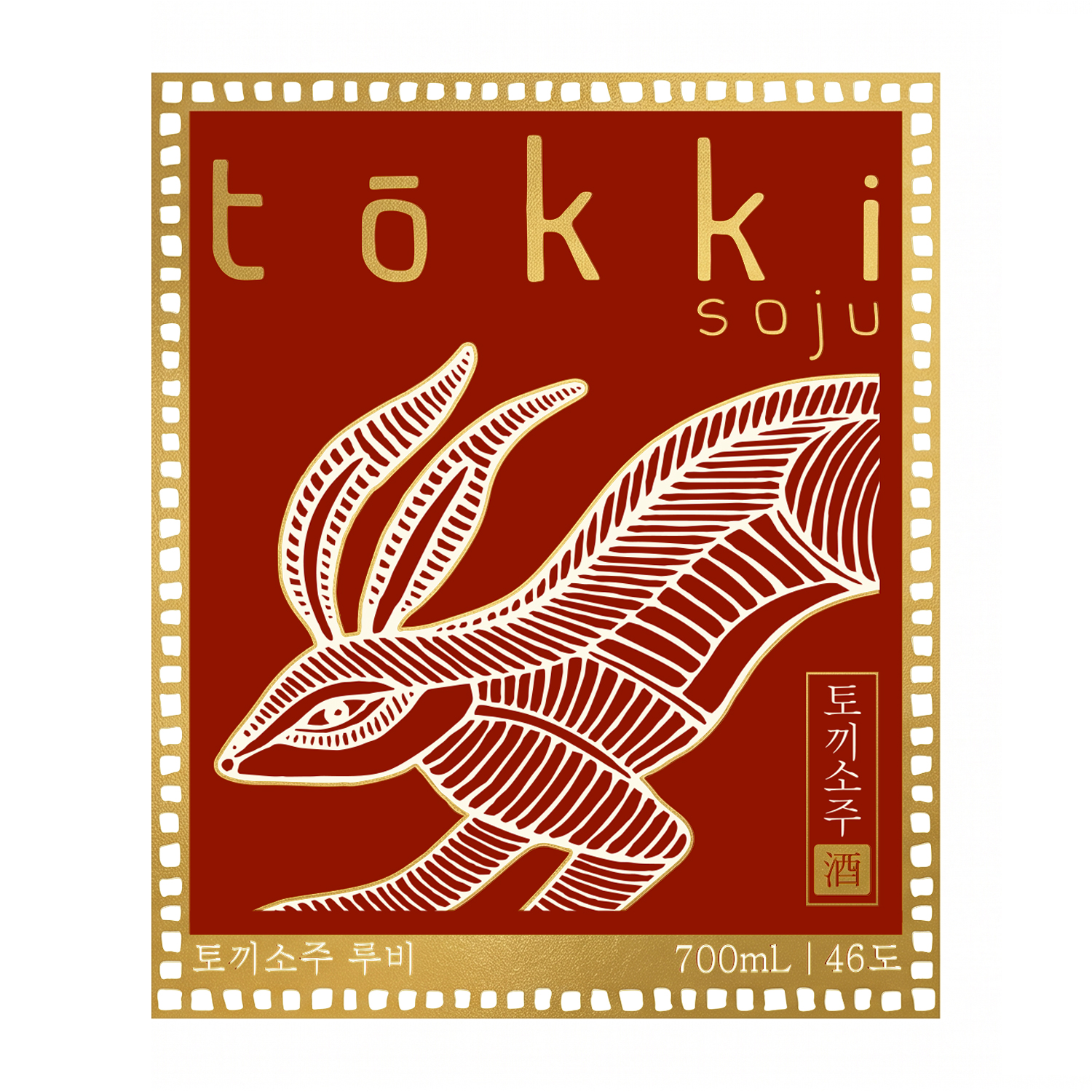
Tokki Soju Ruby Label
200mL or 700mL; 46% ABV
Ruby adds a second dimension to the Gold Label: fruit. Finished on fortified-wine-seasoned oak, it draws out oxidative, dried-fruit depth — the first step past what soju has been.
Try It In: Manhattan, Rob Roy
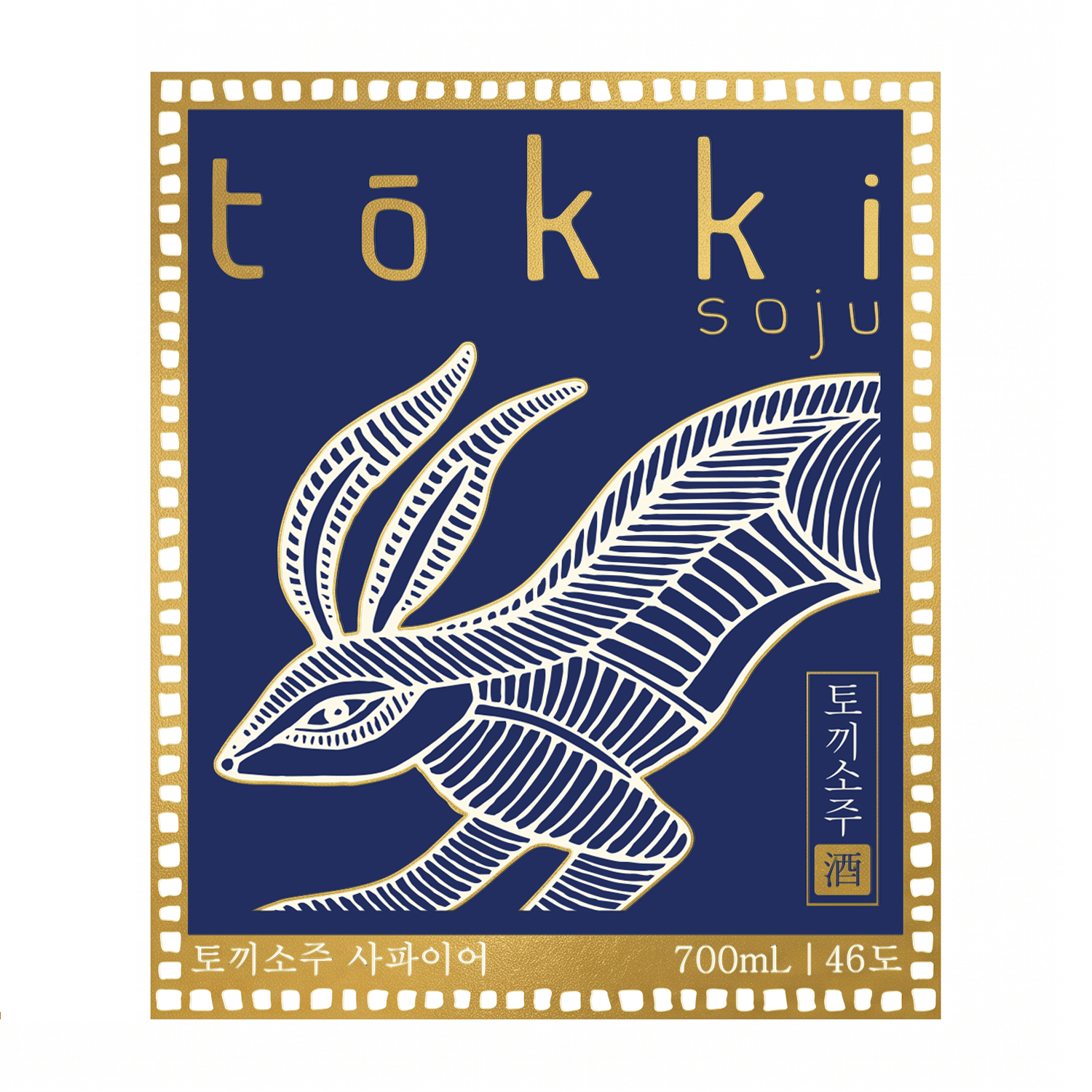
Tokki Soju Sapphire Label
200mL or 700mL; 46% ABV
Where Ruby adds fruit, Sapphire adds a third dimension: coffee. Roasted and singular — a flavor nothing else replicates, long at home in dark-spirit cocktails, now brought into soju for the first time. Soju reaching past what it's been.
Try It In: 50-50 Cola and Soda Highball, Boulevardier
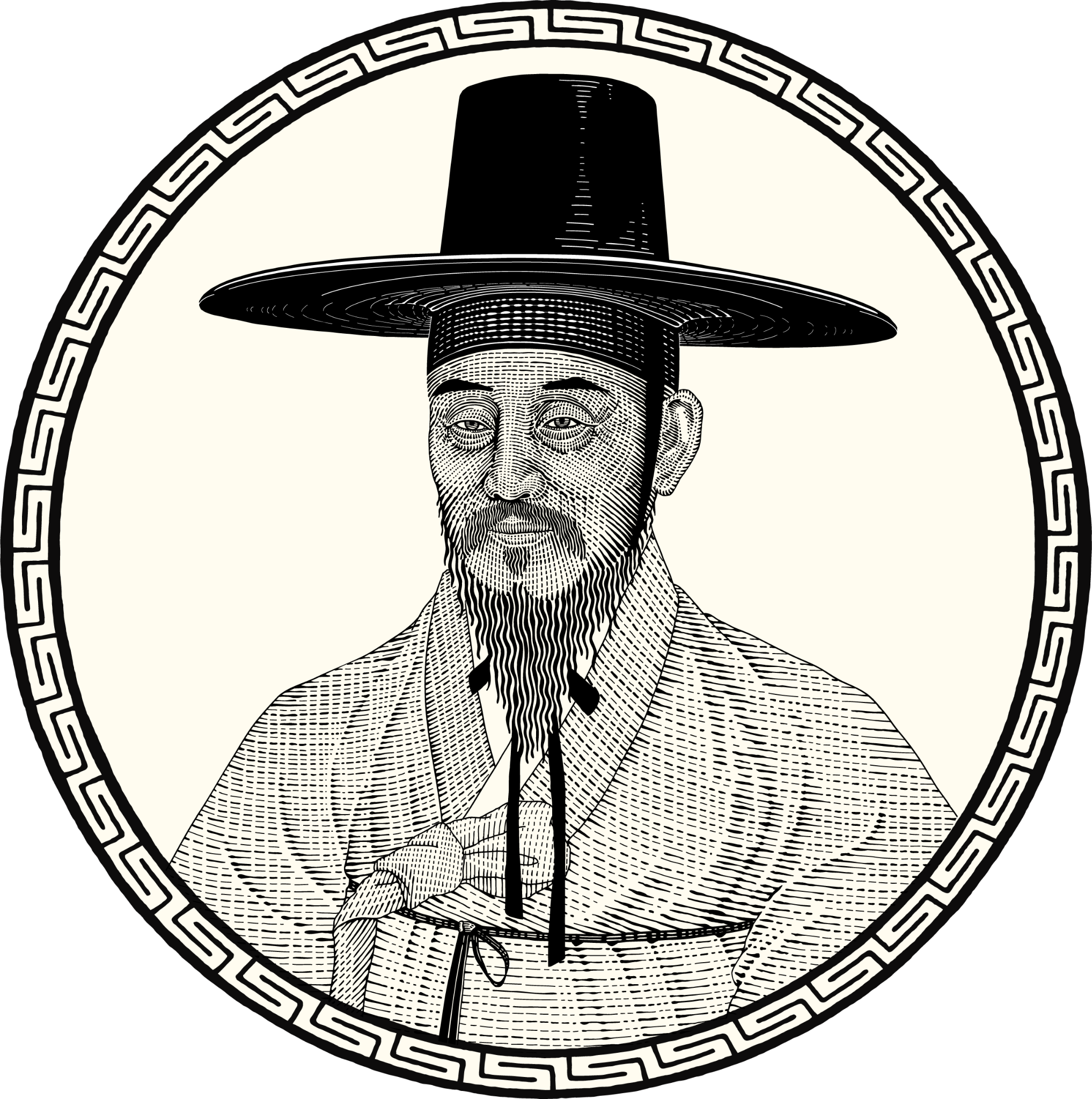
Sonbi is our western spirits brand, named for the scholars of the Goryeo and Joseon dynasties, who chose study over wealth and rank. Their likeness appears on every label. Sonbi Gin, the first release, won top honors at the San Francisco World Spirits Competition in each of its first two years.
PRODUCTS: Gin
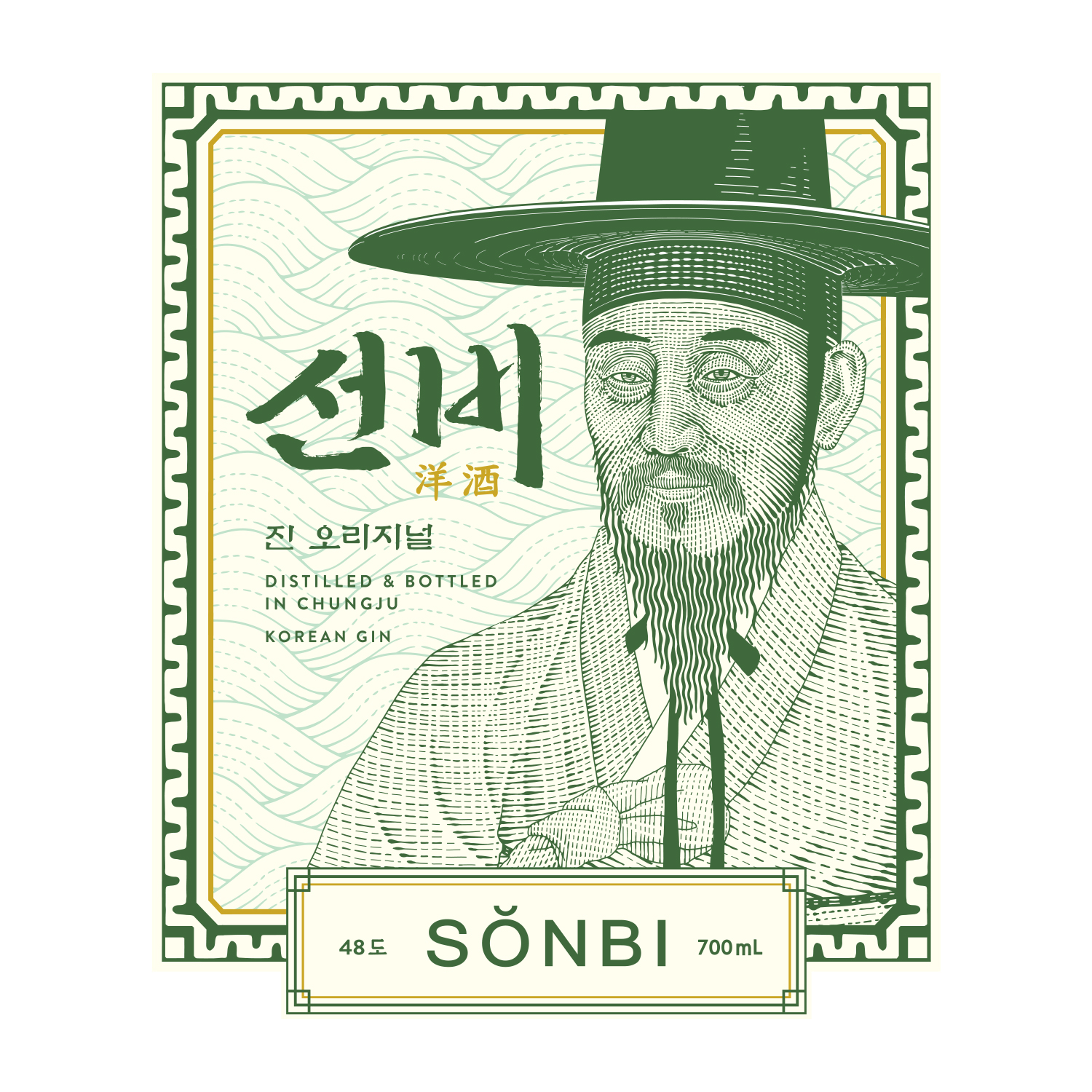
Sonbi Gin Original
200mL or 700mL; 48% ABV
When Tokki Soju moved from Brooklyn to Korea in 2019, we set out to invigorate the country's young craft spirits scene — and to answer a harder question: what could a truly Korean gin be? The answer begins in Chungju, where our commitment to local agriculture earned Korea's Regional Specialty Alcohol designation — granted only to producers using regional agricultural products.
Botanical Build: Chungju Apple, Cardamom, Chinese Licorice, Coriander Seed, Juniper Berry, Lemon, Lemongrass, Mandarin Peel, Omija (Schisandra Berry), and Pine Needle
Try It In: Gin & Tonic, Last Word
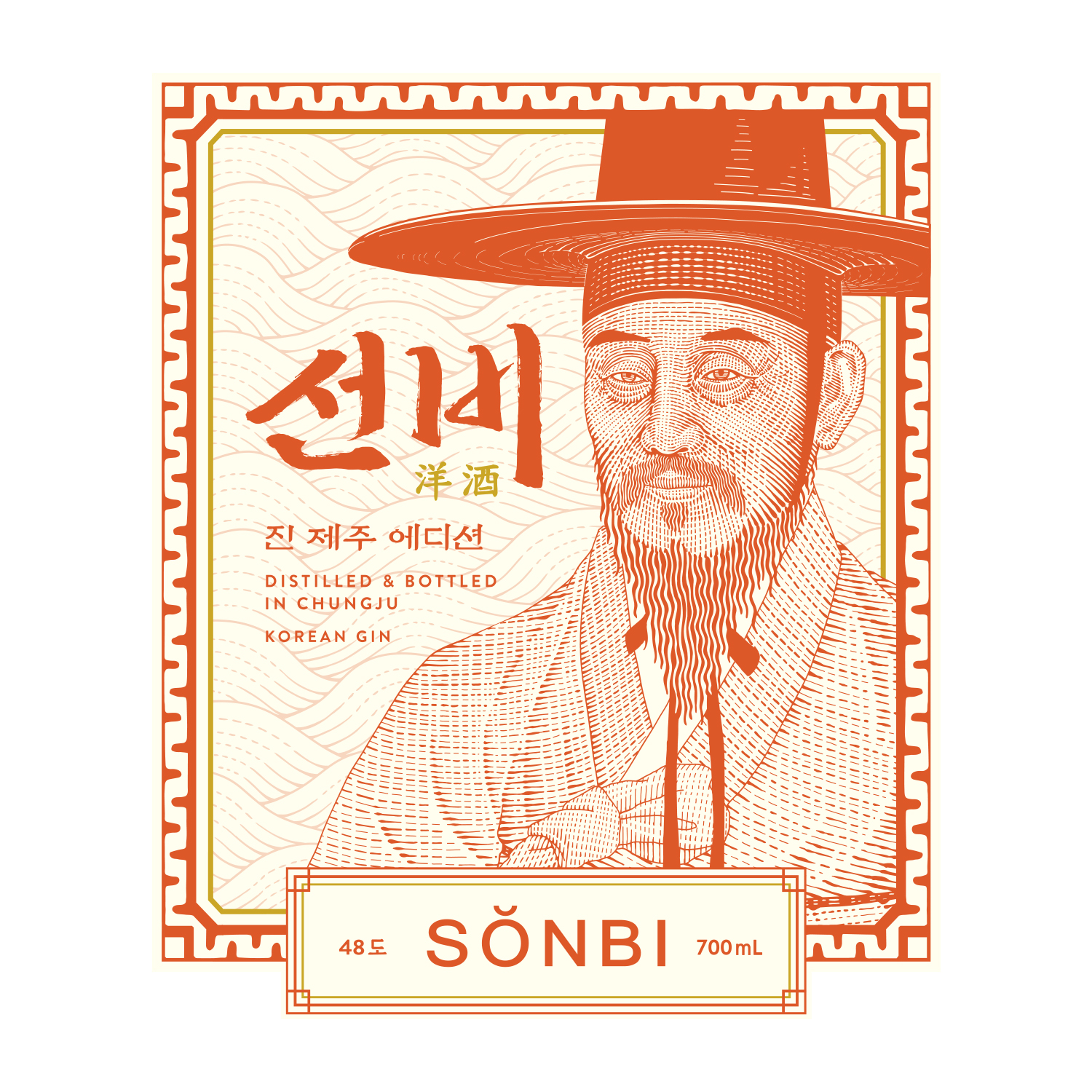
Sonbi Gin Jeju Edition
200mL or 700mL; 48% ABV
Jeju Edition is the brighter follow-up to the Original. We wanted an expression that would spotlight regions of Korea you'd only discover on a second or third visit. Jeju Island, off the southern tip of the peninsula, is celebrated for the many varieties of citrus grown in its volcanic soil. We leaned into that abundance — more citrus, more kinds of it — for a deliciously zesty gin that refreshes with every sip and captures Jeju's sun-warmed groves in a glass.
Botanical Build: Chungju Apple, Chinese Licorice, Coriander Seed, Grapefruit, Juniper Berry, Lemon, Mandarin Peel, Orange, Orange Peel, and Pine Needle
Try It In: Hanky Panky, Bicicleta
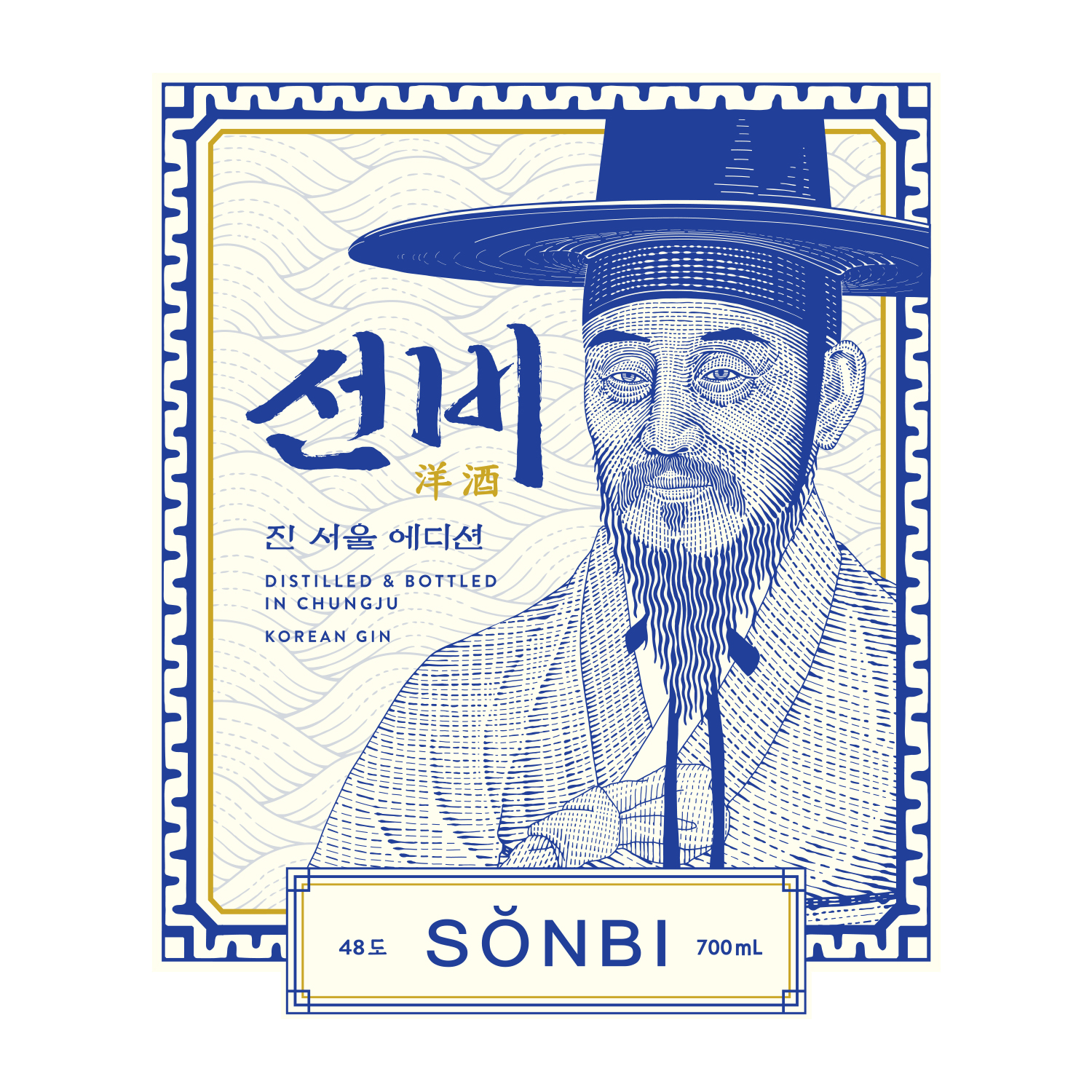
Sonbi Gin Seoul Edition
200mL or 700mL; 48% ABV
Seoul Edition is our third gin and an homage to South Korea's capital. Few would associate the bustling metropolis with agriculture, yet Seoul is ringed by mountains where many of this edition's botanicals grow wild. Here, sweetness is balanced against the gentle bitterness of Korean angelica, making it perfect for darker, spirit-forward cocktails like the Negroni or the Martinez.
Botanical Build: Chungju Apple, Coriander Seed, Jujube, Goji Berry, Juniper Berry, Korean Angelica Root, Korean Black Raspberry, Lemon, Omija (Schisandra berry), Perilla Leaf, and Pine Needle
Try It In: Martinez, Negroni
WHAT SOJU MEANS
Soju is a word, not a definition.
Every East Asian spirit category begins with a name that was never a definition. Baijiu, soju, and shochu all end in the same root, and that root just means "alcoholic drink." It says nothing about distillation — it covers anything fermented as readily as anything distilled. Baijiu prefixes it with a color. Soju and shochu prefix it with "burnt."
So one name describes a color and the other describes heat. Neither specifies an ingredient. Neither specifies a place. These were descriptions, not definitions.
Western categories don't work that way. Scotch, Cognac, and Tequila are each defined by ingredient, technique, and region at once. Soju satisfies none of the three. Japan and China eventually legislated that gap shut. Korea went the other way: in 2013 it folded distilled and diluted soju under a single legal name, and within months "diluted" had come off the labels.
Not that the word was doing much work. Every spirit is diluted — nothing goes into a bottle at still strength. What the label actually meant was that the alcohol had been bought rather than made: neutral ethanol from whatever starch was cheapest that year, cut with water, then sweetened and flavored. That's the green bottle. It became legally indistinguishable from a spirit fermented from rice — same word, same shelf. Twelve years later, production of the mass version began moving offshore, so region went too, without ingredient or technique ever having been secured.
That's the part people miss. The category wasn't left unprotected. The distinction inside it was erased.
We built Tokki Soju the other way around. Comparing soju and shochu, the clearest historical line we found wasn't the still — it was the starter. Koji in Japan, nuruk in Korea. So we anchored to nuruk and rice and worked outward from there. We started in the U.S. in 2016, which we're aware is a strange place from which to chase authenticity. At the time only two other brands were making premium soju at any scale, and both used koji. In 2019 we moved production to Korea and closed the last box.
The first batch settled it. A soft sweetness off the rice, and an aroma like putting your face into a rice cooker. People ask what it tasted like and the honest answer is that it tasted like opportunity — proof the word could still mean something.
Nothing added: no sweetener, no flavoring, no stabilizer, no neutral spirit. And nothing stripped — our soju goes cloudy at around −5°C (23°F), because the fatty acid esters are still in it. Most producers filter those out; clarity is easier to sell. They're also where the texture and the length live.
Rice is unforgiving that way. A grape arrives already carrying flavor — varietal, vintage, site, all of it in the fruit before anyone touches it. A winemaker's job is to protect a gift. Rice gives you almost nothing to protect. Whatever ends up in the glass, someone put it there on purpose.
We've lowered our prices five times since launch. Not because we started too high — every time we've scaled, our cost per bottle has fallen, and each time we passed it through. Our core expressions cost less today than they did on day one. We make a 200mL for the same reason: in a category most people have never tasted properly, a full bottle is a commitment. A 200 is a taste. Lowering the cost of being wrong matters more than almost anything else we can do.
Because the point was never margin per bottle. Soju has a floor and almost nothing above it, and a category with no ceiling isn't really a category. Scotch is legible at $20 because it also exists at $200 — the expensive bottle is what tells you the cheap one is whisky and not just alcohol.
We're not taking share from anyone. We're building the thing share gets measured against later. And we'd rather not be the only ones doing it. One producer doesn't make a category. Five or six does.
CONTACT
global@tokkisoju.com